
A quiet love
The romance lives in a green glass stopper slid three inches across mahogany. Almost no speeches. Adult, restrained, and exact.
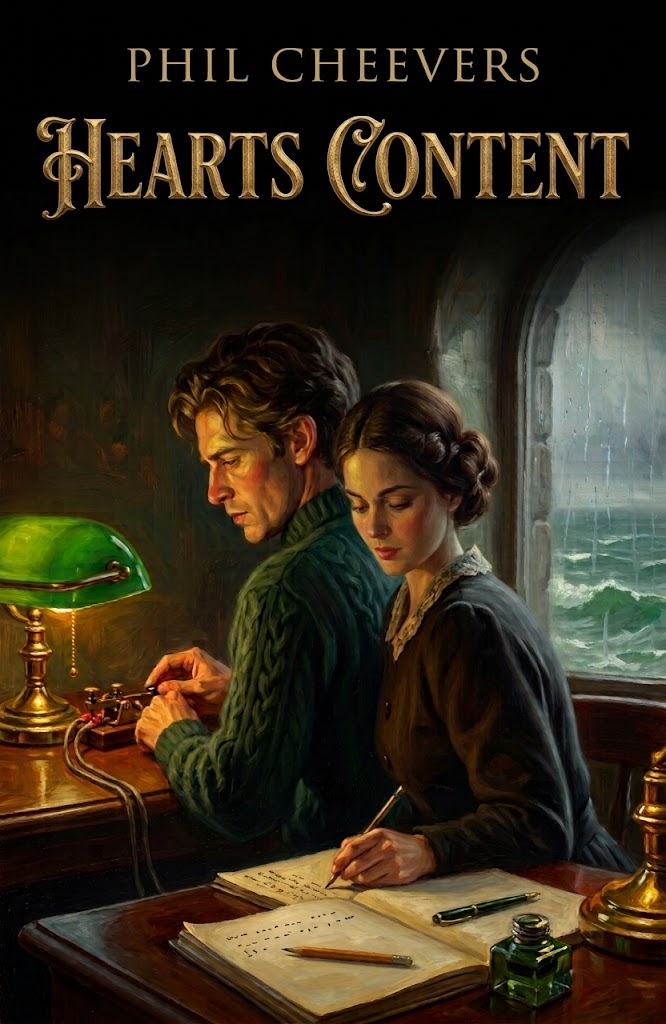
A novella · Heart’s Content, Newfoundland
Two operators. One cable. Twenty years of silence.
At the western end of the first permanent transatlantic telegraph, a young man from Random Island and a logkeeper named Clara keep the watch — through U-boats, ice, a dying technology, and a love built almost entirely of gesture.
May 1942. Silas Thorne arrives at the brick station at Heart’s Content. The windows are papered black. The long-wave static sounds like a gravel beach after a three-day gale. Miller tells him: if you hear the German spark, do not touch the key. Give the numbers to me. If I am asleep, give them to Clara.
Clara does not look up. She knows the figures for every mile of cable between Trinity Bay and Valentia Island. She sets her stone inkwell two inches closer to his side of the bench. That is how it begins.
For twenty years they copy the war, the ice, the voltage drops, and the quiet between them. They dry each other’s ledgers over anthracite. They eat fat-back bread in the dark. They do not speak of the future. The future is something the microwave towers are building down at Clarenville.
When the company sells the brick, they walk the shore path to a stone hut at Southern Cove, lock the iron key on the counter at Hopkins’ Store, and let the wind haul north. The grounding is good.
The romance lives in a green glass stopper slid three inches across mahogany. Almost no speeches. Adult, restrained, and exact.
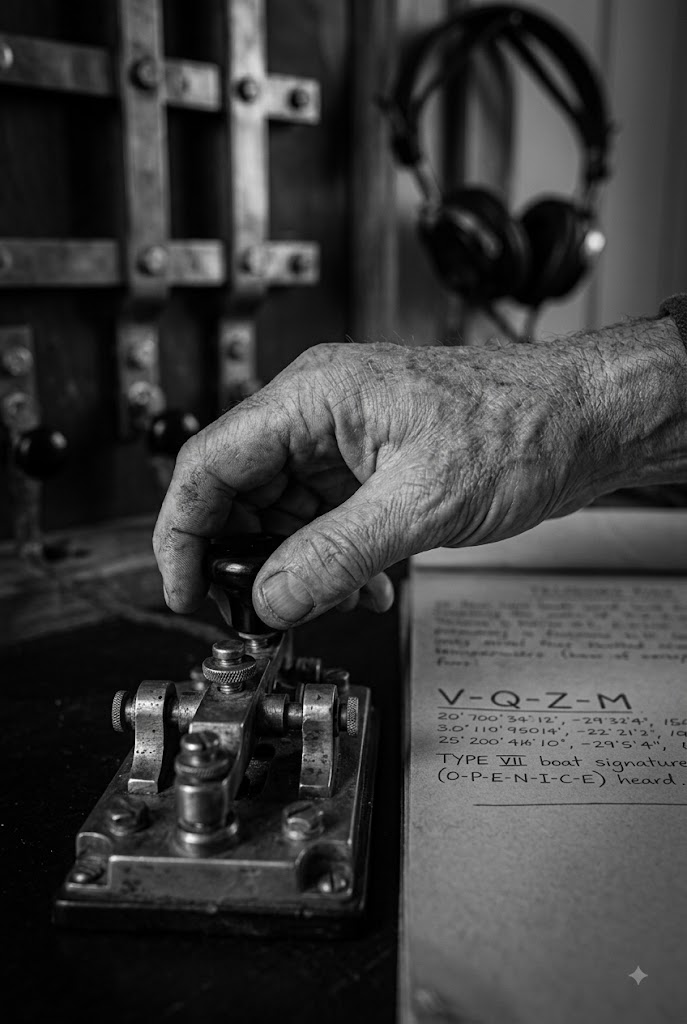
From wartime spark-gaps to a Soviet voltage drop in 1961, two people stay with a technology after the world has moved on.
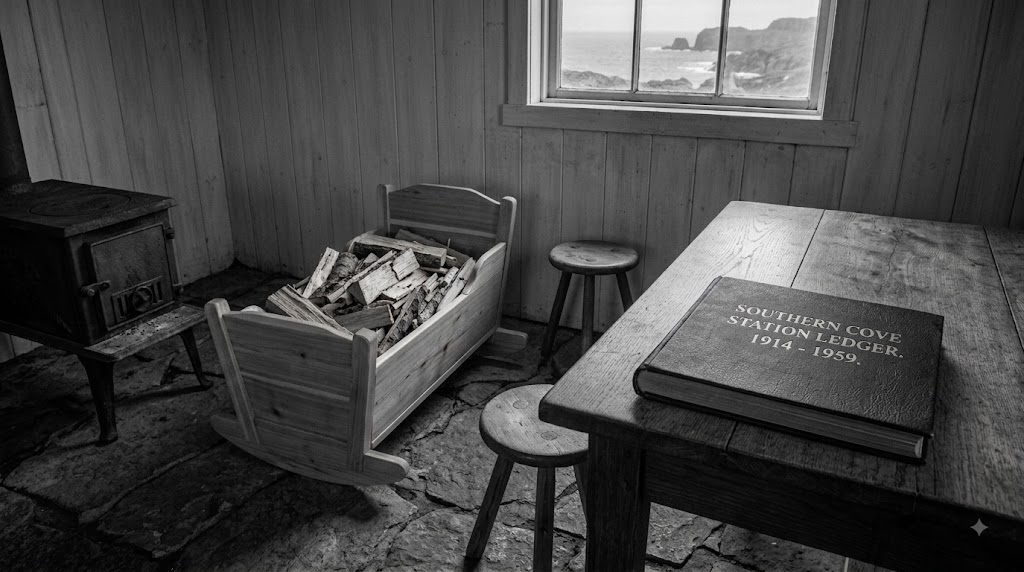
Heart’s Content was the western landing of the 1866 transatlantic cable — the other end of the wire from Valentia, Ireland.
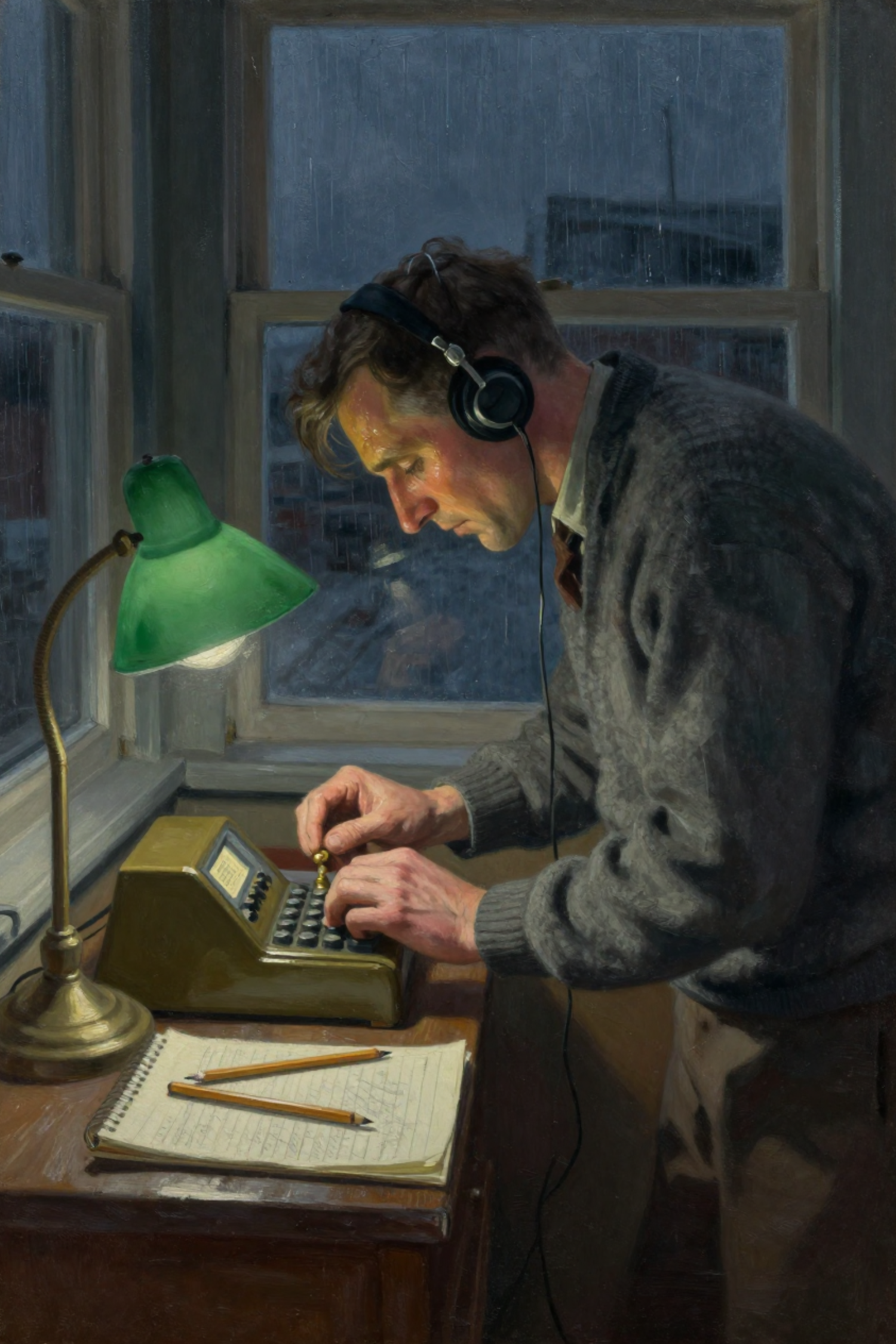
From Chapter 1 · The Learning Curve
The rain came off the high barrens behind the station, turning the gravel road down from the ridge into a red gutter that ran straight into the salt-floor of the harbour. Silas carried his cardboard suitcase under his left arm. The cardboard was soft from the damp, smelling of old potato-sacks and river-silt, and the cheap cotton twine he had wrapped around the corners was digging into the red flesh of his palm. He did not shift the load.
He had walked the seven miles from the railway siding at Clarenville without stopping, his boots logging three pounds of wet gravel with every step, his face dark and level against the grey wash of the sleet.
— Hearts Content, version one. See the note below.
From the author
In version one of Hearts Content, Silas walks seven miles from the railway siding at Clarenville to the station. That was not possible in 1942. I am sorry. I got it wrong.
Random Island had no road to the mainland then. The Hefferton Causeway was not built until 1952. He would have crossed North West Arm or Smith Sound by boat. The Heart’s Content branch railway had been torn up by 1938. From the Clarenville area he would have taken the Newfoundland Railway main line down the Isthmus of Avalon to Broad Cove Junction or Whitbourne, transferred to the Conception Bay branch as far as a station like Carbonear, and gone the last fifteen or twenty miles overland by cart or vehicle. Ice permitting, a coastal packet could have taken him straight across Trinity Bay to the deep-water harbour at Heart’s Content.
I am not changing version one. Version two will have the right road. The rest of the book I will stand behind.
— Phil Cheevers
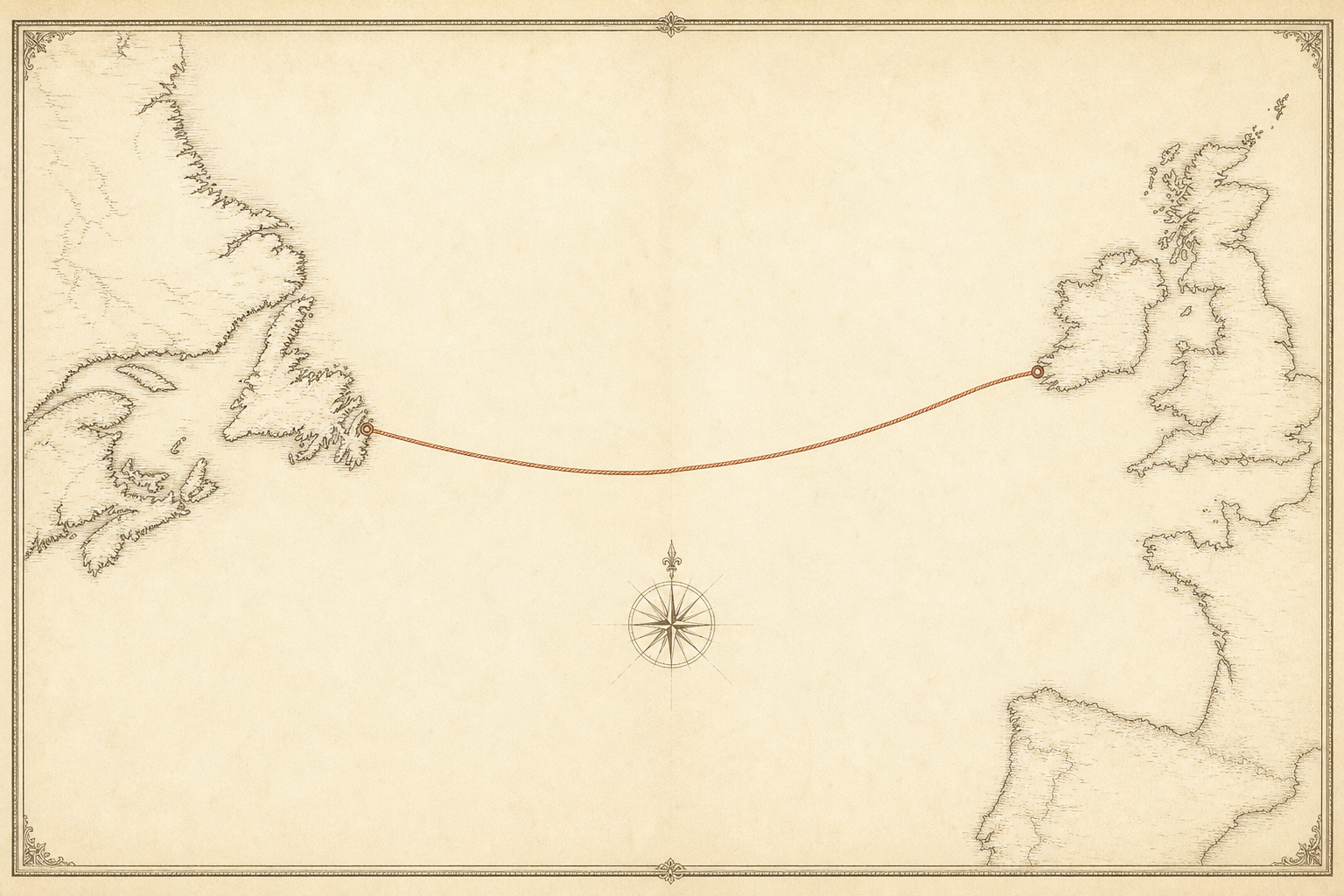
The historic Heart’s Content Cable Station in Newfoundland and Labrador is pursuing a joint UNESCO World Heritage designation with the Valentia Transatlantic Cable Station on Valentia Island, Ireland. Together they are the Transatlantic Cable Ensemble — western and eastern termini of the world’s first permanent successful transatlantic telegraph cable, laid in 1866.
That year the steamship Great Eastern landed the cable at Heart’s Content and cut the time to send a message between North America and Europe from weeks to minutes. The red-brick station, built in the 1870s and working until 1965, is an exceptionally well-preserved monument to that engineering. It has been a provincial museum and historic site since 1974.
UNESCO’s “Tentative List” is the official first step: a country names the places it intends to put forward. Canada added Heart’s Content in December 2017. Ireland added Valentia in July 2022. The two regions signed a memorandum of understanding to run the multi-country nomination together. The gold plaque — inscribed World Heritage Site — comes after a multi-year dossier. That work is underway now, including local community development on both shores.
This book is a plug for that place. The cable is history. Silas and Clara are fiction.
Walk the station. Stand at Cable Park. See where the 1866 wire came ashore.
Heart’s Content Cable Station is on Route 80 in the town of Heart’s Content, Trinity Bay. Guided tours, the 1960s communications room, and remnants of the landing across the road. Season is typically mid-May to early October.
The other end of the same wire is at Knightstown, Valentia Island, County Kerry.
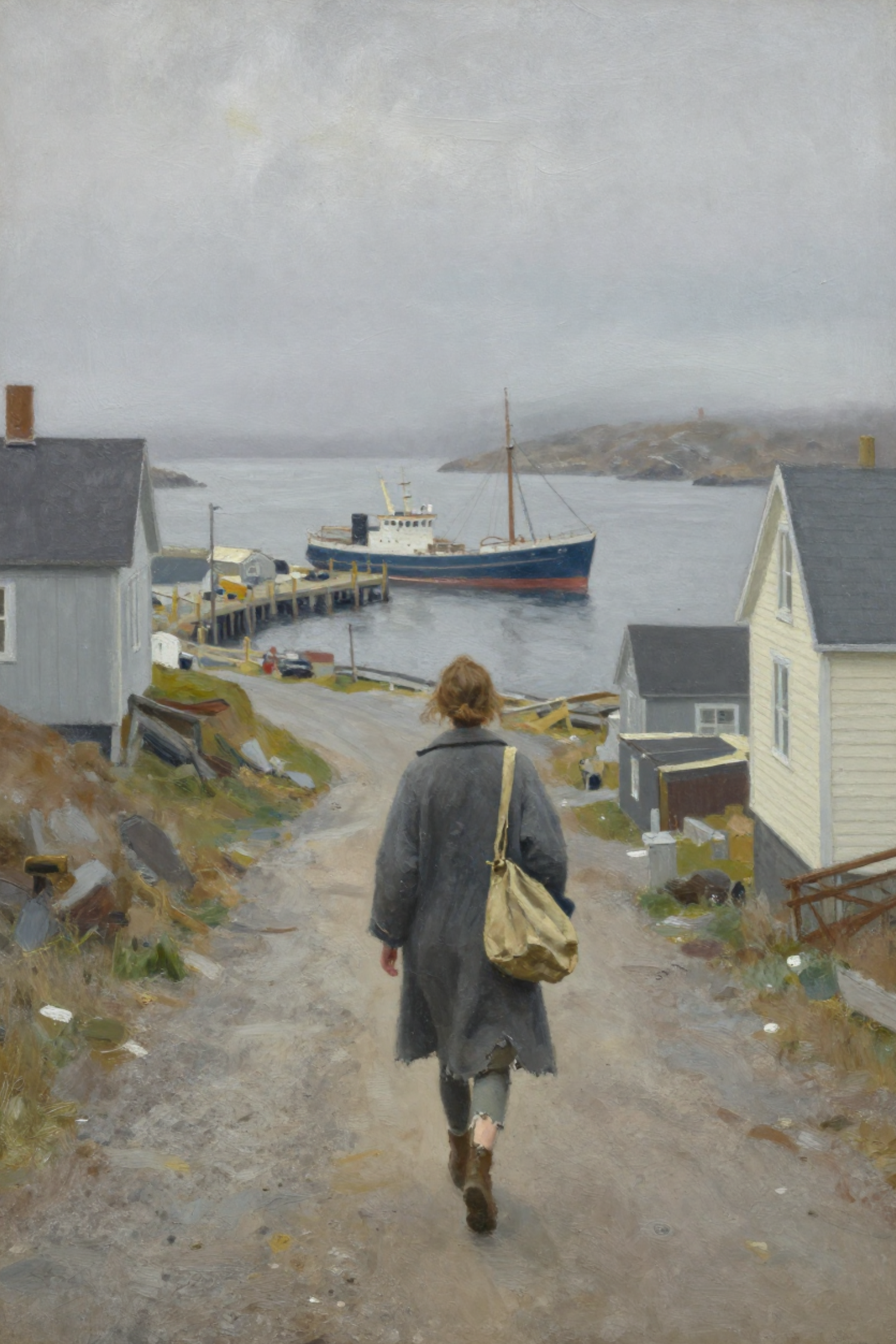
A four-part radio drama / podcast adaptation — about an hour in all — is in production. Same story. Heavy weather. Long silences. Restrained Newfoundland speech, not a stage accent.
Paperback is for sale now on Amazon. ISBN 979-8-18445-950-9. Kobo follows when that link is in.